Invisible Borders: The Patent and Trademark Traps Quietly Draining US Companies Operating in Taiwan
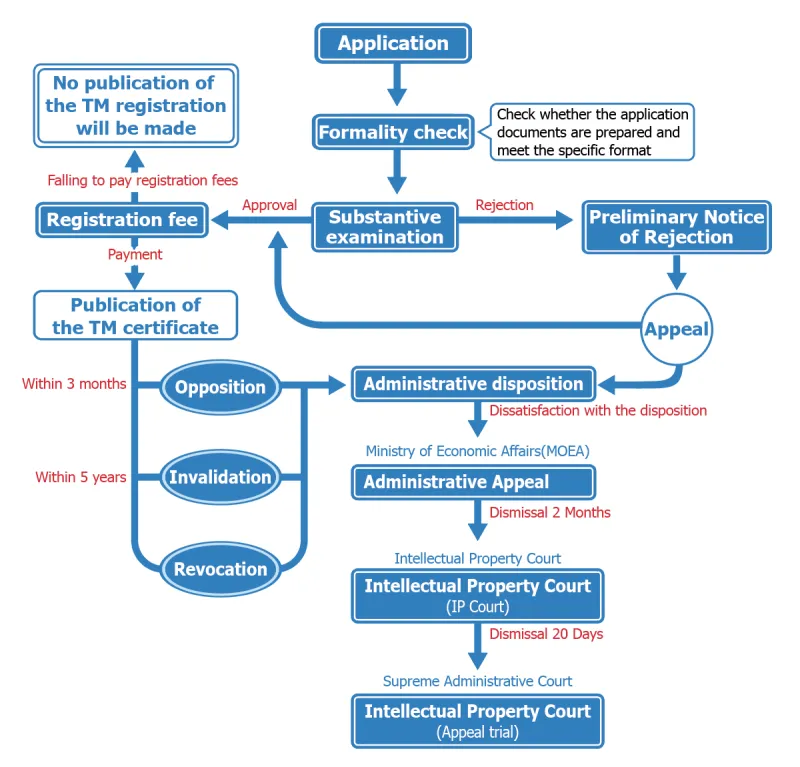
Photo: intellectual property legal documents Taiwan business, via www.goldkeen.com.tw
For many US companies, the decision to expand into Taiwan arrives wrapped in optimism. The island's skilled workforce, advanced manufacturing infrastructure, and strategic position in global supply chains make it an attractive destination. What far fewer of those companies anticipate is the legal minefield waiting on the other side of that decision — one where intellectual property protections that feel intuitive to American executives simply do not translate.
The consequences can be severe. Trademark squatting, design patent vulnerabilities, and the structural mismatch between US and Taiwanese IP law have cost American firms millions of dollars in lost licensing revenue, litigation expenses, and market access. The troubling reality, according to attorneys who specialize in cross-border IP, is that most of these losses were preventable.
The First-to-File Problem Most Americans Never See Coming
The United States operates on a first-to-use trademark system. If your company has been actively using a brand name in commerce, that use confers legal rights — regardless of whether you filed first. Taiwan operates on an entirely different principle: first to file wins.
This distinction, seemingly technical, carries enormous practical consequences. A Taiwanese entity can register your brand name in Taiwan before you do, and under local law, that registration is presumptively valid. The burden then falls on the original brand owner to challenge it — a process that is both expensive and uncertain.
"We see this pattern repeatedly with US companies that have been building brand equity for years before entering Taiwan," said one Taipei-based IP attorney who has represented American clients in trademark disputes. "By the time they're ready to launch, someone else has already filed. Now they're either paying a premium to buy back their own name or they're rebranding entirely for the Taiwan market."
The squatting ecosystem in Taiwan is not random. Professional trademark registrants actively monitor US patent and trademark databases, brand registrations, and even product announcements to identify emerging American brands before their owners move into the market. Technology companies, consumer goods firms, and food and beverage brands have all been targeted.
The defensive strategy is straightforward but requires early action: file trademark applications in Taiwan as soon as a brand is commercially viable in the US, regardless of whether a Taiwan launch is imminent. The cost of registration is modest compared to the cost of dispute resolution.
Design Patents and the Coverage Gap
Utility patents filed in the United States receive a degree of international protection through the Patent Cooperation Treaty, which Taiwan is not a party to. This means that US companies relying on PCT filings to establish a global IP perimeter have a gap where Taiwan should be.
Design patents present an additional layer of complexity. Taiwan's design patent framework differs from US law in its scope of protectable subject matter, the standards applied during examination, and the remedies available in infringement proceedings. American companies that have invested heavily in product design — particularly in consumer electronics, industrial equipment, and medical devices — frequently discover that their US design patents provide no direct leverage in Taiwanese courts.
"The assumption that IP protection travels with the product is one of the most costly misconceptions we encounter," noted a US-licensed patent attorney with experience in both jurisdictions. "Companies file in the US, they feel protected, and then they're surprised when a Taiwanese manufacturer produces a nearly identical design with no legal exposure under local law."
Filing directly with Taiwan's Intellectual Property Office — known as the TIPO — is the required path to domestic protection. TIPO operates with a relatively efficient examination process, but the strategic value of that filing depends heavily on how claims are drafted. US attorneys unfamiliar with TIPO standards often produce applications that are technically valid but narrower in scope than necessary, leaving meaningful gaps in coverage.
Trade Secrets in a Collaborative Manufacturing Environment
Taiwan's manufacturing ecosystem is built on close collaboration between buyers and suppliers. That collaborative culture — one of the features that makes Taiwan so productive — also creates conditions where trade secret exposure is elevated.
NDA agreements, while legally enforceable in Taiwan, are only as strong as the enforcement mechanism behind them. Litigation in Taiwanese courts is time-consuming, and damages awards in trade secret cases have historically been lower than what US executives accustomed to American courts might expect. Criminal trade secret provisions exist under Taiwanese law, but the evidentiary threshold for criminal prosecution is high.
Companies that have navigated this environment successfully tend to adopt a layered approach: contractual protections are combined with technical controls that limit supplier access to only the information necessary for a given production scope. Design segmentation — distributing component manufacturing across multiple suppliers so that no single vendor has access to a complete design — is increasingly common among sophisticated buyers.
What Proactive Companies Are Doing Differently
The firms that manage Taiwan IP exposure most effectively share a common characteristic: they treat IP strategy as a market-entry prerequisite rather than an afterthought. That means conducting a Taiwan-specific IP audit before any licensing agreement is signed, any supplier relationship is established, or any product is introduced to the local market.
Engaging a Taiwanese IP attorney — not merely a US attorney with international experience — is consistently cited by practitioners as a critical differentiator. The nuances of TIPO examination practice, local court precedent, and the informal norms that govern commercial disputes require on-the-ground expertise that no amount of remote research fully replicates.
For companies already operating in Taiwan without this foundation in place, a retroactive audit is still valuable. Identifying existing exposures and establishing a remediation plan is considerably less costly than discovering those exposures through litigation.
Taiwan's IP environment is not uniquely hostile — it is simply different. American companies that approach it with the same assumptions they bring to domestic operations will find those assumptions tested, often at significant expense. Those that invest in understanding the local legal architecture before they need it will find Taiwan to be a far more navigable — and profitable — market.