The Diversification Illusion: Why Shifting Production to Taiwan May Not Reduce the Supply Chain Risk You Think It Does
The past several years have produced a near-consensus among US corporate strategists: China exposure is a liability, and Taiwan is a solution. Boardroom presentations across American industry have featured versions of the same slide — a supply chain map with arrows pointing away from the mainland and toward Taipei, Taichung, and Kaohsiung. The logic appears sound. Taiwan is democratic, technologically advanced, trade-oriented, and politically aligned with the United States.
But a growing number of supply chain analysts, logistics specialists, and operations executives are raising uncomfortable questions about whether Taiwan diversification actually delivers the risk reduction it promises — or whether it simply substitutes one set of vulnerabilities for another while providing the organizational comfort of visible action.
Tracing the Dependency Chain Below the Surface
The appeal of Taiwan as a manufacturing and sourcing destination is well-founded at the finished-goods level. Contract manufacturers in Taiwan are world-class, and the island's precision manufacturing capabilities across electronics, machinery, and specialty components are genuinely difficult to replicate elsewhere.
The problem emerges one level deeper. Many of Taiwan's most capable manufacturers depend on upstream inputs — raw materials, subcomponents, specialty chemicals, and processing equipment — that originate in mainland China. The integration of cross-strait supply chains did not end when US companies began redirecting their procurement. It continued, largely invisible to buyers who were evaluating finished-goods suppliers without auditing their suppliers' suppliers.
"What companies often don't realize is that the Taiwanese manufacturer they've qualified may be sourcing forty or fifty percent of their input materials from China," said one supply chain strategist who advises multinational corporations on Asia-Pacific operations. "You've moved your direct relationship, but the underlying exposure hasn't moved nearly as far."
This dynamic is particularly pronounced in electronics manufacturing, where certain specialty components — passive components, display modules, specific chemical formulations used in PCB production — are dominated by a small number of suppliers, many of whom maintain production concentrated in a limited geographic area.
Geographic Concentration Within Taiwan Itself
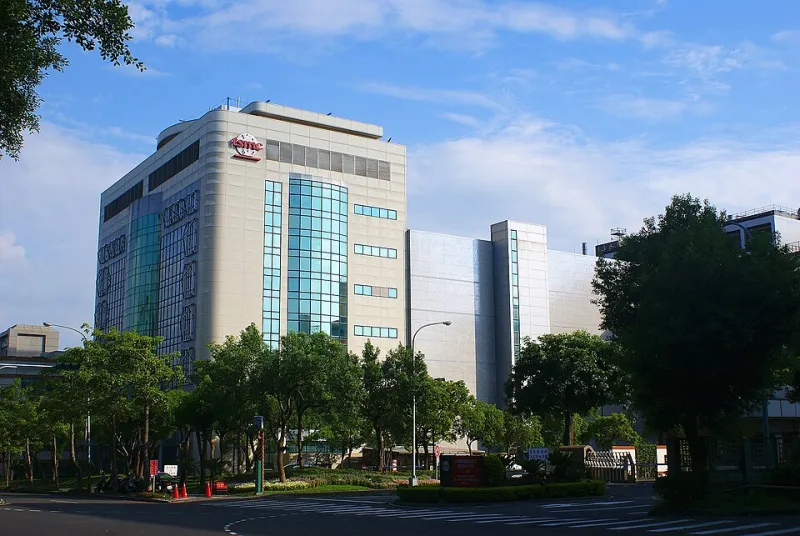
Taiwan's industrial geography adds another dimension to the risk picture that frequently goes unexamined in diversification analyses. The island's manufacturing capacity is not evenly distributed. Specific industries cluster in specific regions: semiconductor fabrication in Hsinchu and Tainan, precision machinery in Taichung, electronics assembly in the greater Taipei area.
This clustering is economically rational — it produces agglomeration benefits, shared infrastructure, and dense supplier networks that reduce transaction costs. But it also means that a single disruptive event — a major earthquake, a severe typhoon, or an extended power supply disruption — could simultaneously affect a large proportion of capacity in a given sector.
Taiwan sits in one of the world's most seismically active zones. The 1999 Chi-Chi earthquake caused significant disruption to semiconductor production that reverberated through global electronics supply chains for months. The island's power grid has faced periodic stress as industrial demand has grown. These are not speculative risks; they are documented historical events.
Companies that have genuinely internalized this reality tend to evaluate Taiwan as one node in a broader regional network rather than as a destination unto itself. Complementary capacity in Japan, South Korea, Vietnam, or Malaysia — depending on the specific product category — provides a buffer that Taiwan alone cannot.
The Geopolitical Variable That Diversification Plans Underweight
No honest analysis of Taiwan supply chain risk can avoid the geopolitical dimension. Cross-strait tension has been a structural feature of the region for decades, but the strategic environment has grown more complex in recent years, and the scenarios that corporate risk managers are asked to model have become more consequential.
The critical point for supply chain planning purposes is not whether a specific adverse scenario will occur — it is whether a company's operations are structured to function if access to Taiwan is disrupted, partially or fully, for an extended period. Many diversification strategies that present Taiwan as the solution to China exposure have not been stress-tested against this question.
"We ask clients to walk us through what happens if Taiwan is inaccessible for six months," said one operations consultant specializing in technology sector supply chains. "The honest answer, more often than not, is that the business faces a severe disruption it has no contingency for. That's not diversification — that's relocation."
Strategically sophisticated companies are building what analysts describe as genuine optionality: maintaining qualified supplier relationships in multiple geographies, holding strategic inventory buffers for the highest-criticality components, and investing in the design flexibility that allows products to accommodate alternative components when primary sources are unavailable.
What Genuine Resilience Actually Requires
None of this is an argument against Taiwan as a sourcing and manufacturing partner. The island's capabilities are real, its workforce is exceptional, and its role in global technology supply chains reflects decades of genuine competitive advantage. The argument is against the reflexive equation of Taiwan sourcing with supply chain resilience.
Companies building durable supply chain strategies are doing several things that distinguish them from organizations engaged in what might be called supply chain theater — the performance of risk management without its substance.
First, they are conducting supplier audits that extend at least two tiers deep, mapping not just their direct partners but those partners' critical dependencies. Second, they are applying honest geographic concentration analysis that accounts for clustering within Taiwan, not just the island's position relative to China. Third, they are building geopolitical scenario planning into their supply chain design process, not treating it as a separate exercise conducted by a different team.
Finally, they are resisting the organizational pressure to declare victory once a visible action — moving a supplier relationship from China to Taiwan — has been taken. Supply chain resilience is a continuous process of assessment and adjustment, not a project with a completion date.
For US companies operating in or considering Taiwan as a supply chain anchor, the most valuable question to ask is not whether Taiwan is better than the alternative. It almost certainly is, across multiple dimensions. The more productive question is whether the specific configuration of your Taiwan supply chain is as resilient as your risk analysis assumes. In many cases, the honest answer will reveal that additional work remains.