Tariff Miscalculation: Why American Companies Are Getting Taiwan's Sourcing Economics Dangerously Wrong
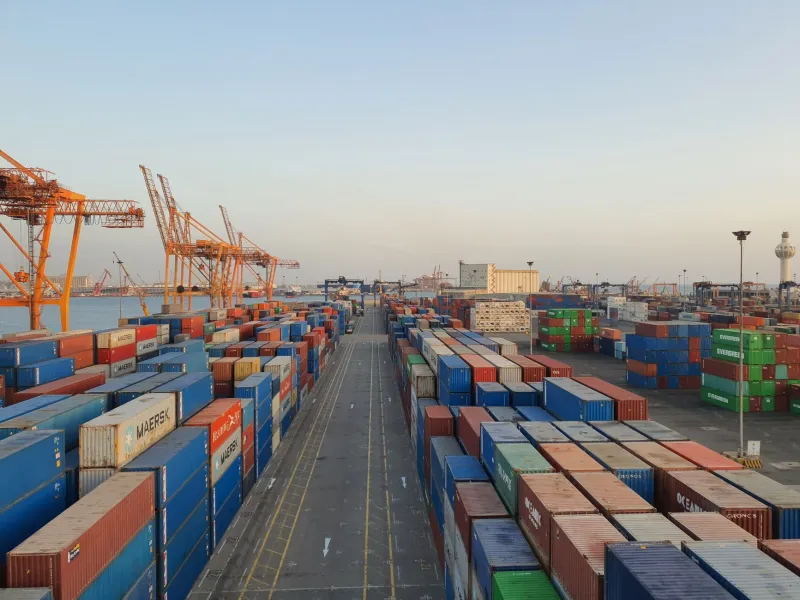
For much of the past five years, Taiwan has functioned as a kind of strategic exhaust valve for American companies squeezed by US-China trade friction. The reasoning was intuitive: shift procurement away from mainland Chinese suppliers, route production through Taiwan, and sidestep the punishing Section 301 tariff schedules that have added anywhere from 7.5 to 25 percent—and in some categories, considerably more—to the cost of Chinese-origin goods entering the United States.
The logic held, at least superficially. Taiwan is not China. Its goods are not subject to the same Section 301 framework. And for companies with longstanding Taiwan supplier relationships, the transition appeared almost seamless on paper.
But a pattern is emerging among US importers that deserves serious attention: the tariff savings many firms projected when they restructured their supply chains around Taiwan are not materializing at the rates anticipated. In some cases, landed costs have actually increased relative to pre-restructuring baselines. The reasons are technical, often buried in customs classification decisions and origin determination rules that procurement teams—and even some trade compliance officers—have not examined with sufficient rigor.
The Origin Determination Problem Nobody Is Talking About
The most consequential error US importers are making involves a fundamental misunderstanding of how Customs and Border Protection determines the country of origin for goods manufactured or assembled in Taiwan.
Under US trade law, origin is not simply a function of where the final manufacturing step occurs. CBP applies a "substantial transformation" standard—a legal test that asks whether a product has been sufficiently transformed in a given country to warrant that country's origin designation. For many categories of goods, particularly electronics, semiconductors, and complex industrial components, the answer is not always Taiwan, even when the final assembly or packaging occurs there.
When Chinese-origin inputs—wafers, substrates, passive components, raw materials—constitute a dominant share of a product's value or undergo only minimal processing in Taiwan before export, CBP retains the authority to reclassify that product as Chinese-origin for tariff purposes. This determination is not hypothetical. It has been applied in enforcement actions against importers who believed their Taiwan-assembled goods were fully outside Section 301 scope.
For companies that restructured their sourcing specifically to escape China tariff exposure, a CBP origin reclassification does not merely eliminate the anticipated savings—it can trigger retroactive duty liability on prior shipments, creating financial exposure that extends well beyond the current fiscal year.
USMCA's Shadow Over Non-USMCA Sourcing Decisions
A separate but related miscalculation involves how US companies are applying USMCA logic to their Taiwan sourcing decisions—which is to say, applying it incorrectly.
The United States-Mexico-Canada Agreement governs trade flows among its three signatory nations. Taiwan is not a party to USMCA. Yet a meaningful number of US procurement professionals, particularly those who spend the majority of their time managing North American supply chains, have internalized USMCA's rules-of-origin framework so thoroughly that they are unconsciously applying similar assumptions to Taiwan-origin goods.
USMCA's regional value content rules and tariff shift requirements were designed to incentivize North American production. They create a relatively clear pathway: if a product meets the agreement's origin criteria, it moves duty-free. That clarity has conditioned American supply chain teams to think in terms of binary tariff outcomes—either a product qualifies or it does not, and qualification is achievable through deliberate sourcing decisions.
Taiwan's trade relationship with the United States does not operate within that framework. There is no bilateral free trade agreement between Washington and Taipei, though negotiations have been ongoing. Goods from Taiwan are subject to standard Most Favored Nation tariff rates under the Harmonized Tariff Schedule, supplemented by any applicable Section 301 duties where origin determinations bring Chinese-origin content into scope. The absence of a preferential trade agreement means there is no qualification pathway analogous to USMCA—and the tariff outcome for any given product depends heavily on classification decisions that can shift with regulatory guidance or enforcement priorities.
Harmonized Tariff Classification as a Hidden Cost Driver
Beyond origin determination, tariff classification itself has become an underappreciated source of cost variance for US importers sourcing from Taiwan.
The Harmonized Tariff Schedule is not a static document. CBP issues binding rulings, the US International Trade Commission publishes classification updates, and trade litigation periodically reshapes how specific product categories are classified. For companies that established their Taiwan sourcing economics based on tariff classifications that were accurate two or three years ago, the current classification landscape may look meaningfully different.
This is particularly acute in the technology and advanced manufacturing sectors, where Taiwan is most active as a supplier. Components that were previously classified under lower-duty HTS codes have, in several documented instances, been reclassified into categories carrying higher MFN rates—or into categories where Section 301 list coverage applies when Chinese-origin content is identified. Companies that have not conducted a classification audit within the past 18 months may be operating on cost models that no longer reflect actual duty exposure.
What Recalibrated Taiwan Sourcing Economics Require
The corrective response is not to abandon Taiwan as a sourcing geography. Taiwan's manufacturing capabilities, particularly in semiconductors, precision machinery, and advanced electronics, remain genuinely differentiated and difficult to replicate elsewhere at comparable quality and scale. The strategic rationale for Taiwan sourcing has not collapsed—but the financial modeling that underpins sourcing decisions requires a more disciplined approach than many US companies are currently applying.
Several concrete steps merit immediate attention for procurement and trade compliance teams.
First, origin determination reviews should be conducted at the component and subassembly level, not merely at the finished product level. Understanding where Chinese-origin inputs enter the supply chain—and what processing they undergo in Taiwan—is essential to accurately assessing Section 301 exposure.
Second, HTS classification should be treated as a living element of cost modeling, not a fixed input. Engaging customs counsel for periodic classification reviews, and obtaining binding rulings for high-volume import categories, reduces the risk of retroactive duty liability.
Third, the potential impact of a US-Taiwan bilateral trade agreement should be modeled as a scenario rather than assumed as a certainty. Negotiations have been productive but remain incomplete, and companies that have built sourcing strategies around anticipated preferential tariff treatment that has not yet been formalized are carrying policy risk that is not adequately reflected in their financial projections.
The Broader Lesson for US Trade Strategy
What the Taiwan tariff miscalculation ultimately illustrates is a structural challenge in how American companies manage trade compliance during periods of sustained policy volatility. When the US-China trade war accelerated after 2018, many firms made rapid, high-stakes sourcing decisions without fully stress-testing the trade law assumptions embedded in those decisions.
Taiwan benefited enormously from that shift, and rightfully so—its industrial base is sophisticated, its rule of law is reliable, and its export infrastructure is mature. But benefiting from a supply chain realignment is not the same as being immune to the trade law complexities that realignment creates.
For US companies operating in Taiwan's business environment, the current moment calls for rigorous recalculation rather than continued reliance on assumptions that were formed under very different trade conditions. The firms that will manage Taiwan sourcing most effectively over the next several years are those that treat tariff exposure not as a solved problem, but as an ongoing analytical discipline.