One Thread, Many Gaps: The Hidden Single Points of Failure Inside Taiwan's Supplier Networks
For many US procurement teams, Taiwan represents the gold standard of sourcing sophistication. The island's dense industrial clusters, rapid prototyping capabilities, and deep technical expertise have made it a preferred destination for American companies seeking reliable manufacturing partnerships. But a growing number of those same companies are discovering an uncomfortable truth only after a disruption has already occurred: the supplier diversity they believed they had built was, in many cases, an illusion.
The problem is not unique to Taiwan, but it is particularly acute there—and it is poorly understood by American executives who have not spent significant time mapping the actual structure of the island's upstream supply chains.
The Appearance of Independence
On paper, a US firm that contracts with four or five Taiwanese vendors across different product categories might reasonably assume it has distributed its risk. Each vendor operates under a separate corporate entity, maintains its own management team, and quotes independently. From a procurement standpoint, the boxes are checked.
What those contracts rarely reveal is that two of those vendors may share the same upstream resin supplier in Taichung, that three of them rely on the same regional freight forwarder for last-mile export consolidation, or that a single specialty fabricator in Tainan is the only qualified source for a critical subcomponent that feeds into all of them. The vendors themselves may not volunteer this information—not out of deliberate concealment, but because from their perspective, these upstream dependencies are simply the normal operating conditions of their industry.
Taiwan's manufacturing ecosystem evolved over decades into a highly efficient, tightly interlocked network of specialized producers. That efficiency is precisely what makes it valuable. It is also precisely what makes it fragile in ways that are not immediately visible to outside buyers.
Concentration Risk in Practice
The concept of counterparty concentration risk is well understood in financial services—regulators and risk officers spend considerable effort ensuring that institutions are not overexposed to a single counterparty whose failure could cascade through a portfolio. In supply chain management, the equivalent discipline is less consistently applied, and in cross-border sourcing relationships, it is frequently neglected entirely.
In Taiwan's context, this neglect has produced a predictable pattern. A US company establishes what it believes is a resilient multi-vendor sourcing structure. An upstream disruption occurs—a factory fire, a logistics bottleneck, a raw material shortage, or a quality certification suspension affecting a single Taiwanese producer. Suddenly, multiple ostensibly independent vendors are simultaneously unable to fulfill their commitments. The US buyer, expecting that its diversified approach would insulate it from exactly this kind of shock, finds instead that the shock has propagated through the entire network simultaneously.
This is not a hypothetical scenario. Supply chain professionals who work regularly in Taiwan report that post-disruption audits frequently reveal upstream concentration that was never disclosed during vendor qualification.
Why This Happens
Several structural factors contribute to this dynamic. Taiwan's industrial geography encourages clustering—semiconductor-adjacent suppliers concentrate in Hsinchu, precision metal fabricators cluster in specific districts of Taichung, and electronics assembly operations are heavily concentrated in the greater Taipei and New Taipei corridor. Within these clusters, it is common for multiple vendors serving the same buyer to draw from the same pool of upstream suppliers simply because those upstream suppliers are the most qualified, most proximate, or most cost-competitive options available.
Additionally, Taiwan's subcontracting culture is deeply embedded. It is standard practice for a Taiwanese vendor to subcontract portions of an order to another firm without notifying the end buyer. This is not deceptive by local business norms—it is simply how production capacity is managed during peak demand periods. For a US company operating under the assumption that its contracted vendor is performing all work in-house, however, this practice introduces counterparty relationships that were never disclosed and therefore never assessed.
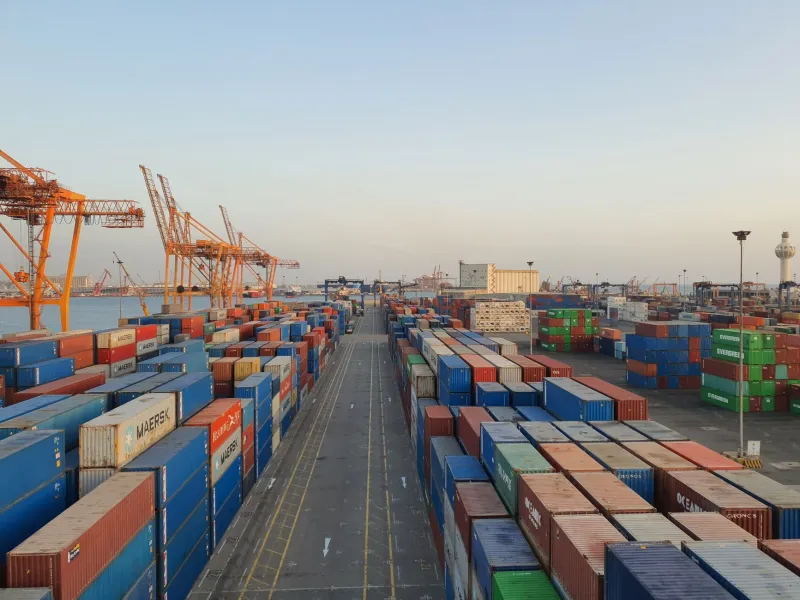
Finally, logistics concentration adds another layer of risk that is frequently overlooked. A significant share of Taiwan's export freight moves through a relatively small number of freight consolidators and customs brokers, particularly for small and mid-sized shippers. A disruption affecting one of these intermediaries—a labor dispute, a regulatory action, a capacity crunch at a specific terminal—can simultaneously delay shipments from vendors that a buyer believed had no operational connection to one another.
Building a Framework for True Supplier Independence
US companies that want to move beyond the illusion of diversification need to approach supplier qualification with a different set of questions than those typically included in standard vendor audits. The goal is not simply to verify that a vendor is capable of fulfilling an order under normal conditions—it is to map the upstream dependencies that determine whether that vendor can fulfill an order when conditions are not normal.
A practical framework for this assessment involves three layers of inquiry.
First, map subcomponent sourcing. For each critical input in the product being sourced, identify the vendor's primary supplier and at least one alternative. If a vendor cannot identify a viable alternative source for a key subcomponent, that is a concentration risk that should be documented and weighted in the sourcing decision.
Second, audit logistics pathways independently. Do not assume that vendors using different freight forwarders or shipping lines are operationally independent at the logistics layer. Trace the actual routing of shipments—including consolidation points, customs brokerage, and port of export—to determine whether multiple vendors are, in practice, dependent on the same logistics infrastructure.
Third, stress-test through scenario modeling. Present vendors with hypothetical disruption scenarios—a key upstream supplier suspending operations, a specific port experiencing extended delays—and evaluate the quality and specificity of their contingency responses. Vendors that have genuinely mapped their own upstream dependencies will answer these questions differently than those operating without that visibility.
What This Means for Long-Term Contracts
For US companies preparing to enter or renew long-term sourcing agreements with Taiwanese vendors, the stakes of this analysis are particularly high. A multi-year contract negotiated without upstream dependency mapping locks a buyer into a structure whose actual risk profile may be substantially different from what the vendor qualification process suggested.
Legal counsel familiar with Taiwan's commercial environment can assist in drafting contract language that requires disclosure of material subcontracting relationships and upstream supplier changes. Some US buyers have also begun incorporating supply chain transparency clauses that obligate vendors to notify buyers when a key upstream supplier changes, is acquired, or experiences a significant operational disruption.
These provisions are not yet standard in Taiwan-sourced contracts, but they are becoming more common among US firms that have experienced the consequences of upstream concentration firsthand.
The Intelligence Gap
Ultimately, the concentration risk problem in Taiwan's supplier networks is an intelligence problem. The information required to assess true supplier independence exists—it is held by the vendors themselves, by logistics providers, and by the upstream manufacturers who sit at the center of these networks. The challenge for US buyers is developing the relationships, the audit processes, and the contractual frameworks necessary to surface that information before a disruption makes it visible in the worst possible way.
Taiwan's manufacturing ecosystem will remain one of the most capable in the world. But capability and resilience are not the same thing. US companies that treat them as synonymous are operating with a risk exposure they have not fully priced—and in many cases, have not yet fully seen.